
Okeechobee 72-Hour Release Status
The Okeechobee County Sheriff's Office publishes no person-level 72-hour release feed. No distinct three-day URL, filter, field set, update schedule, or public display-retention promise was found as of July 14, 2026. The official OCSO Inmate Search page resolves to an aggregate Booking Statistics chart rather than a roster.
Its counts cannot be turned into names or release events. They do not state who was booked, who remained in custody, who was released, or who transferred. A three-day list reconstructed from those totals would be unsupported. The sound alternative is a request for existing releasable records within a precise range, followed by a check of the disposition for each relevant custody event.
The embedded OCSO chart displays its aggregate booking-type scope.
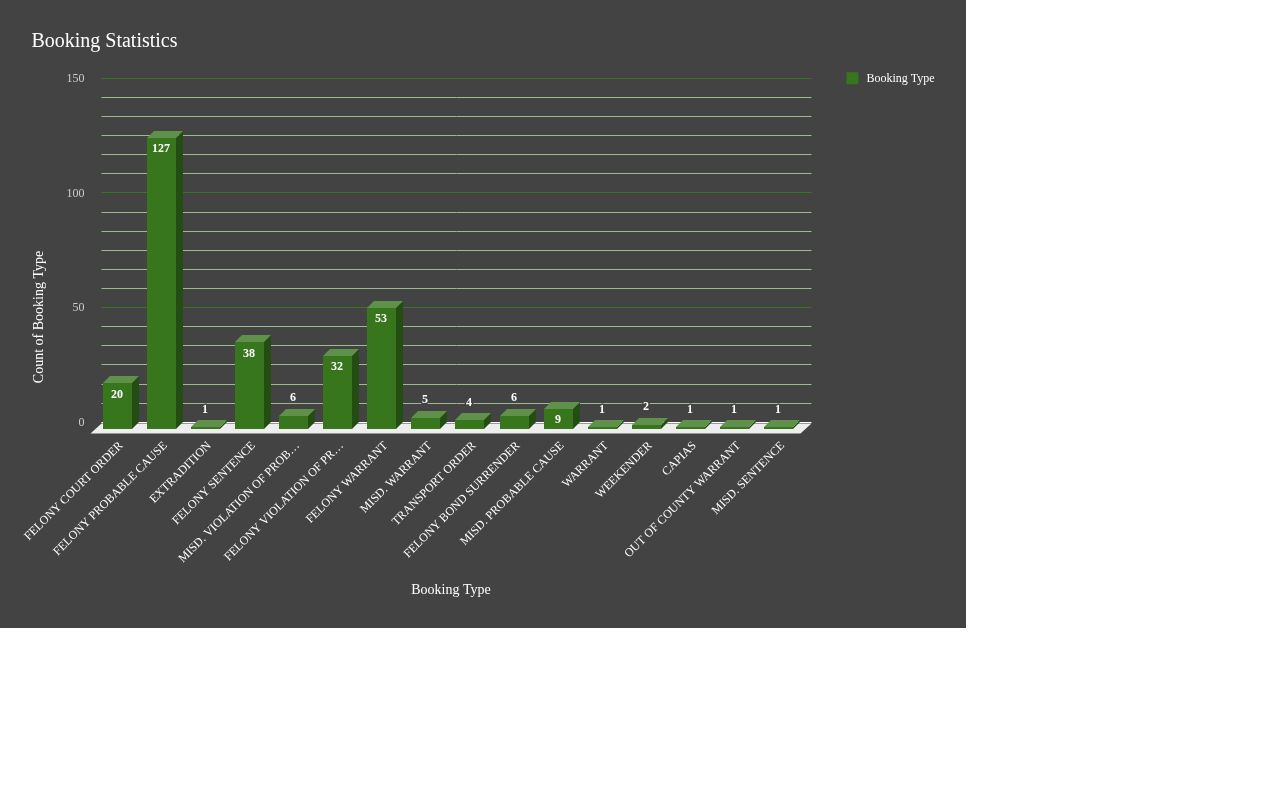
The screenshot confirms the local data gap: it offers totals but none of the person-level facts a 72-hour release list would require.
Request Okeechobee Three-Day Records
A date-range request through the official OCSO records page should seek existing records. Florida law does not require OCSO to create a custom report or answer a conclusion about who “went home.” State the beginning and ending date and time, including the time zone when clarity matters. If the request concerns one person, add the full name, aliases, date of birth if known, approximate booking date, and booking number.
- Define the exact 72-hour interval rather than saying “recent.” Include the calendar dates and start and end times.
- Ask for existing booking and release records within that range, or for the named person's release transaction if the inquiry is narrow.
- Request actual release date and time, release type or disposition, and receiving authority or transfer destination if maintained.
- Choose electronic delivery and ask for a cost estimate before work begins. Permit lawful redactions.
- If a part is withheld, ask for the specific statutory basis. Do not treat a partial redaction as proof that the whole record is closed.
504 NW 4th Street
Okeechobee, FL 34972
863-763-3117
records@okeesheriff.com
Requests reviewed weekdays, 8:00 a.m. to 5:00 p.m., excluding holidays
The official page also links to the GOVQA Public Portal. OCSO publishes $0.15 per page and a $15 hourly lengthy-research charge, with prepayment. No fixed turnaround is promised. A narrow interval and clear fields can reduce avoidable research and help the custodian locate the right record series.
Florida Chapter 119 allows access subject to specific exemptions and lawful redaction. If only part of a record is protected, the releasable part can still be produced. The office may charge for copies and extensive work, but a requester can narrow the dates or fields after receiving an estimate. Ask for the booking and release transactions that already exist. A demand for OCSO to compile a new list, analyze events, or decide which people truly “went home” asks for more than an existing record.
Okeechobee 72-Hour Release Fields
The public chart supplies none of the fields below. They are the facts that make an agency record useful across a three-day period. The requested labels describe the information sought, not necessarily the exact terms used by the jail database.
| Field | Meaning in a three-day review |
|---|---|
| Committed name and aliases | Identifies the person attached to the event. |
| Booking number | Separates repeated jail stays and links the release to one booking. |
| Booking date and time | Shows when OCSO began the custody event. |
| Actual release date and time | Places the departure inside or outside the requested 72-hour interval. |
| Disposition or release type | Distinguishes bond, court order, time served, completion, transfer, or another event. |
| Receiving authority | Identifies continued custody with FDC, another county, USMS, ICE, or another agency. |
| Case, charge, bond, and hold data | Connects the jail action to the court case and restraints that may remain. |
A booking photo can support identity but cannot establish release. A court disposition may explain why custody ended yet still omit the actual processing time. Read the agency transaction, the court record, and any receiving-system entry according to the question each record can answer.
Okeechobee Weekend Release Delays
A 72-hour window can cover Friday-night, weekend, and holiday events that a same-day check misses. Yet this wider span creates its own timing issues. OCSO reviews records requests on weekdays and excludes holidays. A request sent during a closure may not be reviewed until the office reopens. That office schedule is not evidence that jail release processing stopped.
Court docket entries, VINE events, and agency records can post on different cycles. A judge's order can appear before the physical release transaction is complete. A VINE alert can follow the source feed on its own schedule. If the person moved to another custodian, that receiving system can update later still. For urgent present-custody questions, the jail information line is the short-term check. For documentary proof, wait for the release record.
A one-day inquiry may be enough when the exact date is known. The Okeechobee County 24-Hour Releases route focuses on today's custody event, while the three-day request is better for an uncertain weekend departure.
Note: Office review hours affect the request response, not the legal meaning or physical time of a jail release.
Verify Okeechobee Three-Day Releases
Three records can answer three different questions. The OCSO release transaction states when the county jail custody event ended and how. The Okeechobee criminal docket can show the bond order, dismissal, sentence, time-served credit, probation, or other legal action. Florida VINE can flag a status change from a participating source and can help monitor movement.
| Source | Useful for | Key limit |
|---|---|---|
| OCSO jail line | Whether county custody appears to continue now | Not a certified historical transaction |
| OCSO release record | Actual departure time, disposition, and transfer detail | May require a records request |
| Okeechobee OCRS docket | Court order, sentence, credit, or case disposition | Does not establish the physical release minute |
| Florida VINE | Status event and notification | Delay or transfer meaning requires agency confirmation |
| FDC offender search | State prison or state-supervision status | Excludes county-only jail sentences and county probation |
Use the Okeechobee County release-record search path when the date is unknown or the inquiry crosses county, state, federal, or immigration custody. That approach follows the record to the agency with authority over the specific event.
Okeechobee Release Versus Transfer
Bond, own recognizance, time served, sentence completion, and a court-directed release can end a county jail stay. None automatically ends the criminal case or every form of legal restraint. Probation, pretrial conditions, registration, another warrant, or a separate case may remain.
A transfer means the person stays in custody under another authority. An OCSO record may point to FDC after sentencing, another county on a warrant, USMS in a federal matter, or ICE on a detainer. Follow that destination. FDC's Corrections Offender Network covers state prison and state supervision, not county-only sentences. BOP becomes relevant after federal designation, while ICE's public locator has its own limited scope.
Exceptional departures, including hospital movement, escape, or death, must keep the agency's exact description. They should not be counted as ordinary releases home merely because the local bed assignment ended.
State-prison release is another distinct event. Okeechobee Correctional Institution is an FDC prison inside the county, not an extension of the OCSO jail. FDC's public record can show state custody and release information for people sentenced to its system. It does not backfill a county-only booking. A three-day OCSO request and an FDC search therefore cover different populations even when both events occur in Okeechobee County.
Okeechobee Release Data Quirk
OCSO's local naming creates a trap. The link says Inmate Search, yet its embedded object is a personless Google Sheets Booking Statistics chart. There is no name search, release-date filter, current status, photo, cadence, or archive window. A person's disappearance cannot imply release because no person was displayed in the first place.
The chart also cannot establish whether a booking count changed because of release, correction, data refresh, or another cause. It is an aggregate presentation. It should remain evidence only of the missing feed, never a substitute for the missing names and dispositions.
Florida retention law makes another distinction. A short or absent web display does not mean the underlying booking and release record was destroyed. Agency schedules, exemptions, legal holds, and the actual record series govern retention. A Chapter 119 request is the real availability test for the three-day interval.
Identity should be tested with more than a name. Use the booking number, date of birth or age, case number, known aliases, photograph, and offense date when available. If records conflict, favor the custodian responsible for the specific event and request the source document. A docket may explain an order. VINE may signal movement. Only the holding or receiving agency can settle what happened in its custody.
Note: The OCSO mobile-app descriptions also do not advertise a jail roster, release list, or booking-photo feature.