
Okeechobee Release Mugshot Sources
OCSO does not publish a person-level recent-release gallery. Its page labeled Inmate Search resolves to aggregate Booking Statistics without names, custody states, or photographs. The reliable local path is a focused request for the existing releasable booking photograph attached to a named and date-identified booking. Ask for the release disposition separately.
The two records answer different questions. A booking photo links an image to an arrest and booking event. The release transaction shows when OCSO ended custody and whether the person returned to the community or transferred to another authority. Neither an image nor the absence of an image establishes the present case result.
| Official channel | Has a photo? | How to use it |
|---|---|---|
| OCSO public Booking Statistics chart | No | Do not use it for names, mugshots, or release status. |
| OCSO booking-photo records request | When releasable and maintained | Identify one booking and request the existing image. |
| FDC inmate-release search | Yes, when present in FDC | Use for state prison or state-supervision records, not a county-only stay. |
| FDLE limited registries | Often | Use only for people in the covered registration category. |
| OCSO press notices or local news | Sometimes | Treat each item as selective and verify later release elsewhere. |
Request an Okeechobee Booking Photo
The OCSO records page provides email, telephone, an online GOVQA portal, and in-person service. Ask for an existing image, not a new report. Precise identifiers reduce same-name mistakes and help separate one booking from another.
- Give the full committed name and aliases. Add date of birth, approximate arrest date, and booking number when known.
- Request the existing releasable booking photograph for that booking. Ask separately for the booking sheet and release transaction.
- Specify actual release date and time, release disposition, and any receiving authority needed to distinguish transfer from community release.
- Ask for electronic delivery, a cost estimate before work begins, and lawful redaction of protected material.
- If OCSO withholds a portion, request the specific statutory basis. A general page label does not replace a record-specific exemption.
504 NW 4th Street
Okeechobee, FL 34972
863-763-3117
records@okeesheriff.com
Requests reviewed weekdays, 8:00 a.m. to 5:00 p.m., excluding holidays
OCSO publishes $0.15 per page and a $15 hourly rate for lengthy research, with prepayment. The response time depends on locating and reviewing the record. Juvenile, sealed or expunged, active investigative, victim, medical, intelligence, and other protected content may require redaction or withholding.
The official OCSO request-channel capture shows the local email, phone, portal, and service information.
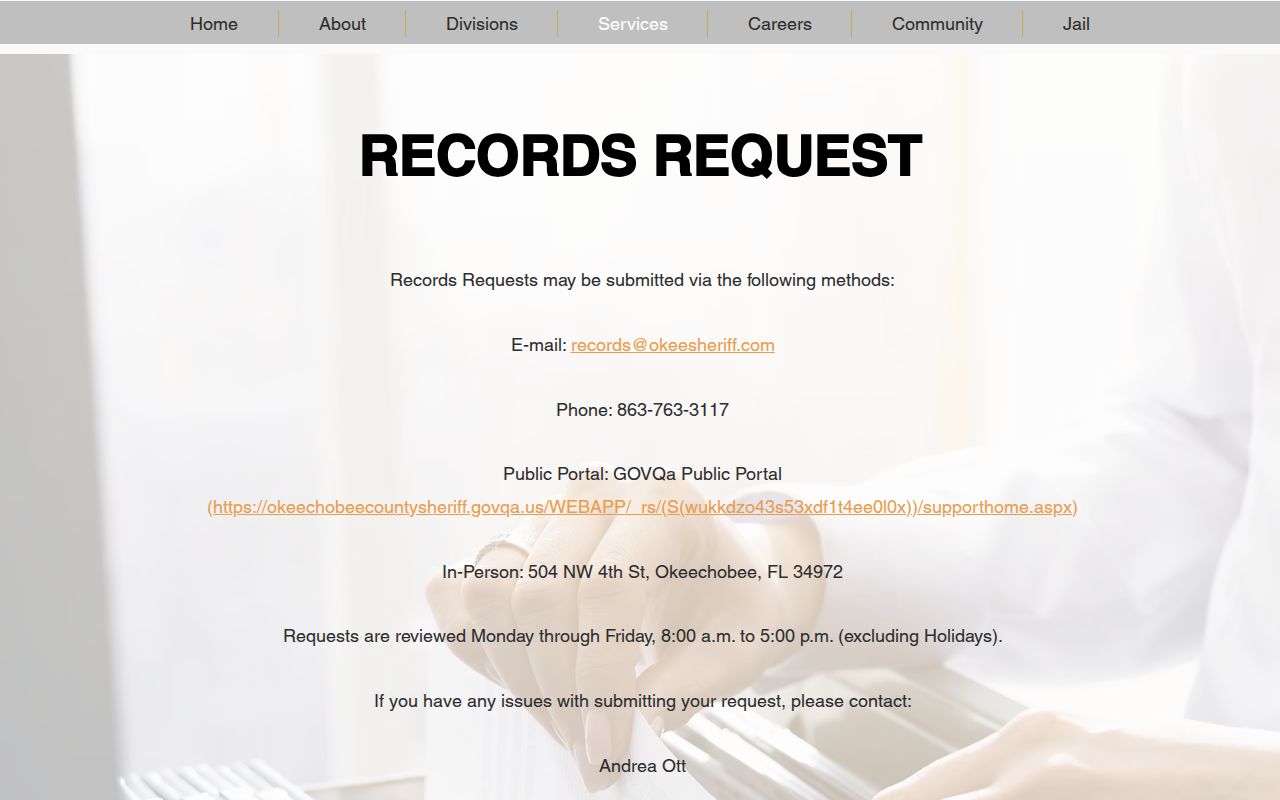
Using the named records channel creates a traceable route to the source image and the separate release facts.
Okeechobee FDC Release Photos
Okeechobee County contains both the county jail and Okeechobee Correctional Institution, a separate Florida Department of Corrections prison. Their photos are not interchangeable. A person with an Okeechobee County case may never enter FDC, while a person at Okeechobee CI can come from any Florida county.
The FDC Corrections Offender Network supports photos in current-inmate, inmate-release, supervised-population, and absconder searches. Its dedicated Inmate Release search says it includes information and photographs of people released or scheduled for release and is updated nightly. Search by the six-character DC number when possible, or use name prefixes and aliases. Confirm identity from the DC number, photo, physical description, offenses, and sentence details.
An FDC image is a state corrections photograph. It may not be the Okeechobee County booking photo. FDC also excludes people sentenced only to county jail, county probation, and other non-FDC supervision, so the absence of a state result says nothing conclusive about a county booking.
FDC warns that location, status, and release data can change quickly. Read the current status, release information, and any community-supervision data together. A photograph attached to a released state-prison record can remain useful for identity after prison custody ends, while a later supervision term remains active. It does not establish the details of an earlier OCSO booking, and it should not be labeled as the sheriff's mugshot without source proof.
- Booking photo
- An image made in connection with a specific arrest and intake.
- Corrections photo
- An image maintained by FDC within a state prison or supervision record.
- Release transaction
- The agency record that states when and how one custody event ended.
- Transfer
- A change of custodian, not a return to the community.
Okeechobee Mugshot App Limits
The current OCSO iOS and Android descriptions list issue reporting, community resources, department contacts, social channels, and press releases. They do not advertise an inmate roster, recent releases, or mugshots. The app was checked as a possible official photo channel and was unavailable for that purpose based on its public listing.
The OCSO Google Play description shows the stated feature set.
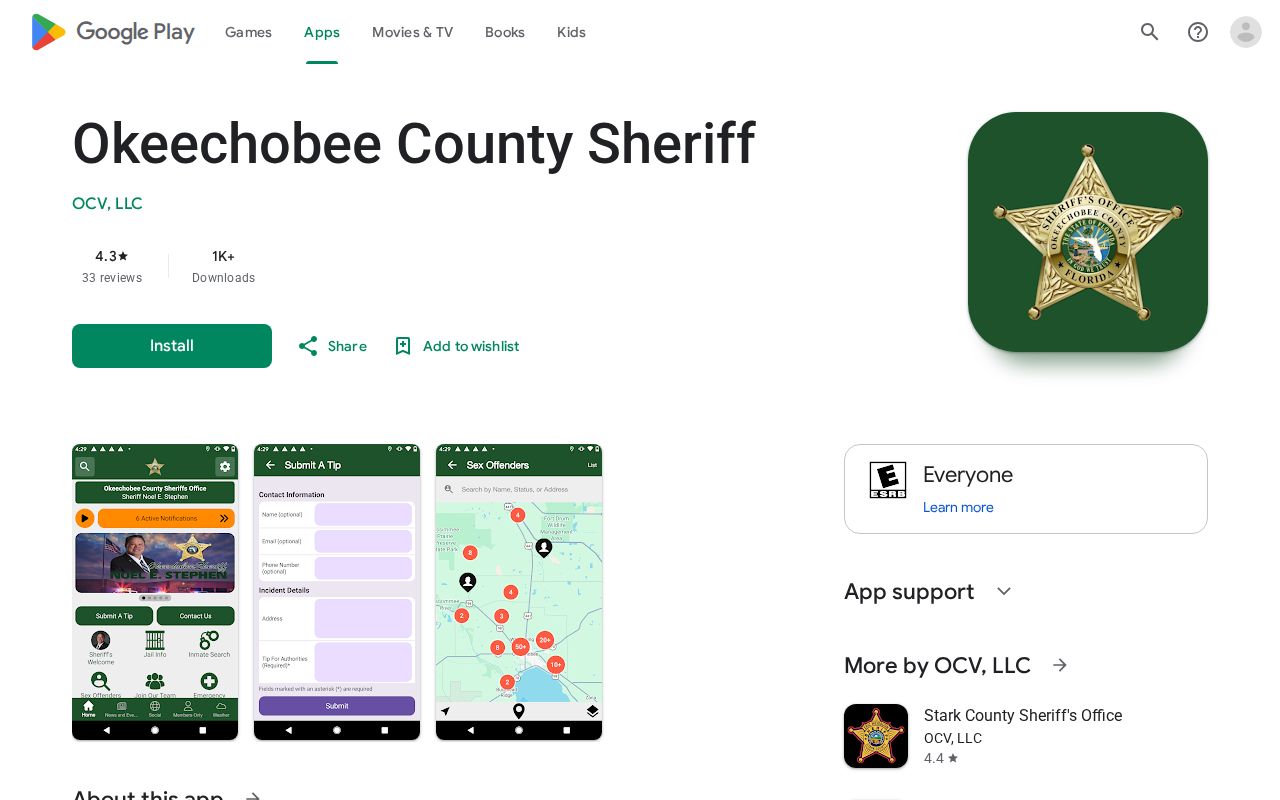
The listing supports using the app for its named reporting and contact tools, not as a photo or release-record source.
OCSO press notices can include an arrest image in a selected incident. That archive is not complete. An arrest notice establishes only what the notice reported on its publication date, and the release must be verified through OCSO, VINE, or the court as appropriate. The Okeechobee 24-Hour Releases route explains the same-day agency checks when no public feed exists.
Okeechobee Mugshot Discovery Limits
Local news reports and third-party aggregators can surface copies of arrest images. They are leads, not authoritative release records. A report may never be updated after bond, dismissal, acquittal, sentencing, transfer, or release. An aggregator may retain stale data, misstate a transfer, omit its update window, or fail to reflect a change at the original source.
No commercial mugshot publisher, data broker, or removal service is linked or endorsed. Primary records from OCSO, the Okeechobee Clerk, FDC, VINE, and federal systems are better for confirming the event each agency controls. A copied photo should not be reproduced without checking rights, provenance, accuracy, and current legal access.
A mugshot must not be treated as proof of guilt. It documents an intake image. The later court record may show dismissal, no information, nolle prosequi, plea, verdict, sentence, or another result. The Okeechobee County release search connects the image context to the official custody and court records.
Okeechobee Mugshots After Expungement
The local seal and expunge process begins with a certified disposition from the Okeechobee Clerk and an FDLE Certificate of Eligibility. The FDLE packet can require a witnessed or notarized application, a prosecutor statement for an expunction when applicable, certified dispositions, proof that relevant supervision ended, an authorized fingerprint card, and a nonrefundable $75 fee. The certificate is an eligibility step, not the final court relief.
After FDLE issues the certificate, the person petitions the court with the required papers and fee. A hearing may follow. Relief takes effect after a judge enters the order and the certified order reaches FDLE. The clerk says later access to a sealed or expunged Okeechobee case requires a motion to reopen. Automatic sealing of a qualifying state criminal-history entry does not by itself seal local court and agency records.
The Okeechobee Clerk criminal instructions show the certified-disposition and local seal or expunge route.
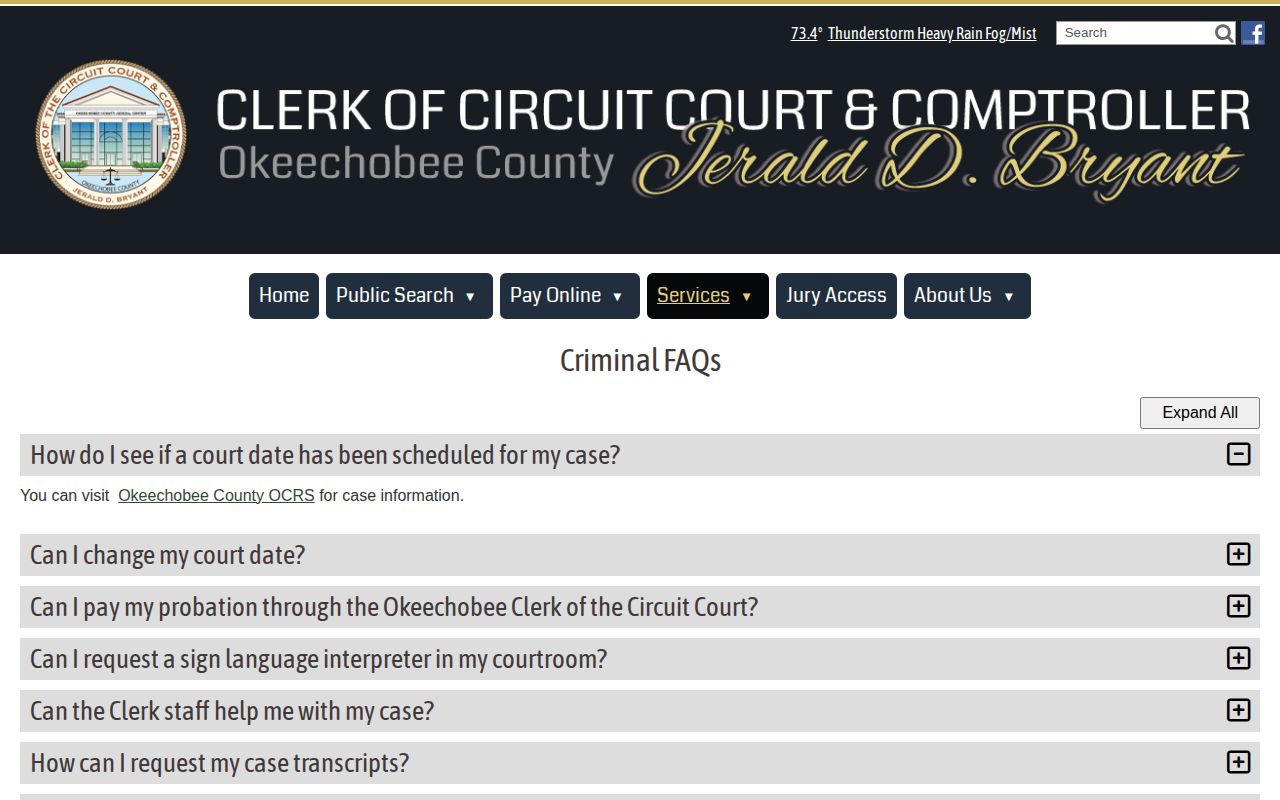
The local steps explain why an application or eligibility certificate alone does not remove the source record or photo.
Note: Juvenile confidentiality can restrict access before any adult-style seal or expunge analysis applies.
Florida Mugshot Removal Rule
Florida Statutes § 901.43 applies to a defined class of commercial booking-photo publishers. A covered publisher may not solicit or accept payment to remove an arrest booking photograph. The depicted person or legal representative can send the publisher's registered agent a written request by registered mail with enough identity proof and exact information to identify the photo.
A covered publisher must remove the image without charge within 10 calendar days and may not republish or redisseminate it. The law provides injunction and daily-penalty remedies for noncompliance and later republication. Its scope is important, though. It reaches publishers that solicit or accept removal payment or whose primary business model is commercial publication of booking photos. It is not a universal takedown rule for every publisher or news outlet.
The request must go to the publisher's registered agent by registered mail and contain sufficient identity proof plus details that identify the exact photograph. Those procedural facts matter. An informal message, an incomplete image description, or a demand sent to the sheriff invokes a different process. The statute regulates a covered publisher's conduct. Public-record access, court sealing, expunction, and correction of an inaccurate agency record remain separate legal routes.
The official statute capture documents the ten-day rule and its limited publisher definition.
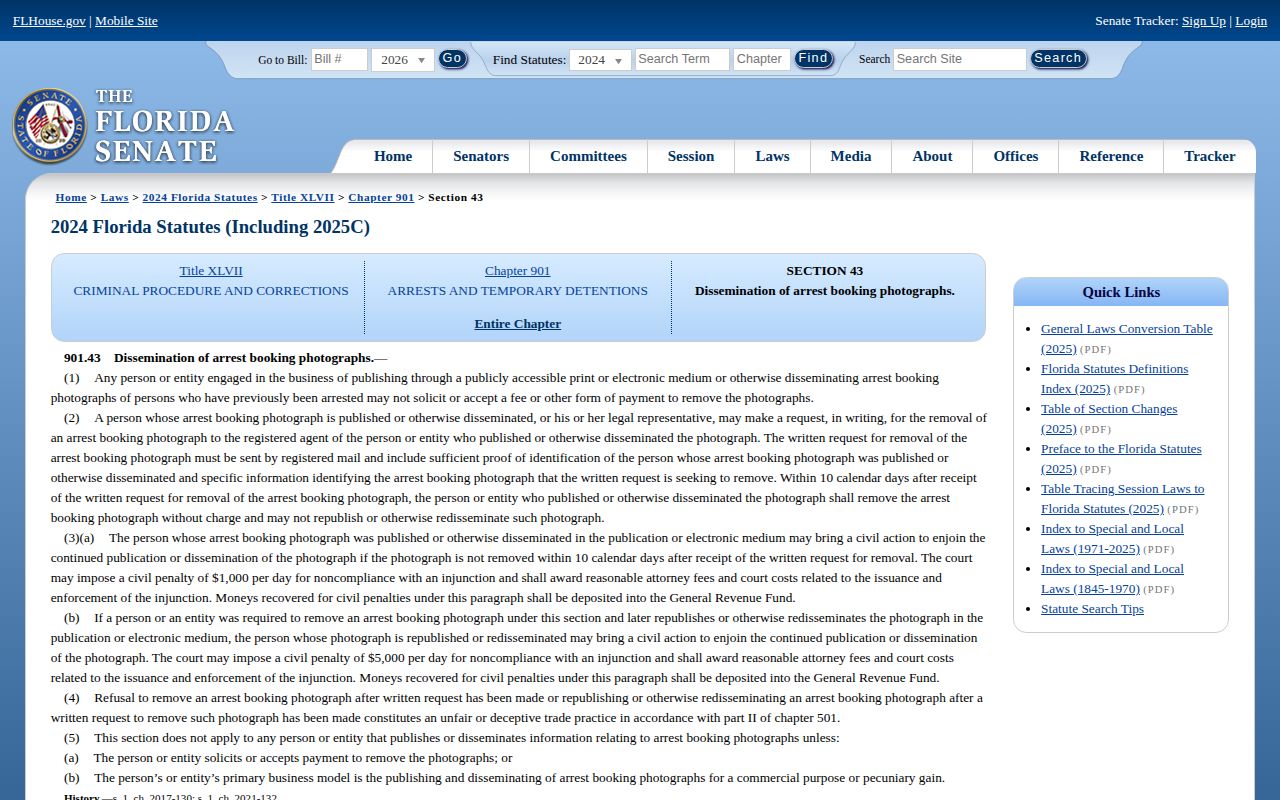
The law addresses qualifying commercial publication. It does not order OCSO to destroy the government record, seal a case, or erase a photo held under another lawful record rule.
Verify Okeechobee Release Mugshots
Start with identity. Compare the name, booking or DC number, age or date of birth when shown, photograph, physical descriptors, case number, and offense dates. Similar names are common, and a photo alone may come from a different booking or corrections system.
Next, match the source to the custody event. OCSO controls the county booking and release transaction. FDC controls state prison and state-supervision history. The Okeechobee criminal docket records legal action, but not the minute jail staff completed release. VINE supplies notice of a participating custody-status change and can lag or reflect transfer.
Finally, read disposition words precisely. Bond and recognizance can leave the case active. Time served ends the named custodial term but may leave supervision or another hold. Transfer to FDC, another county, USMS, or ICE means custody continued. A valid photo becomes useful only when that context stays attached to it.